


What is Blast Radius in Cybersecurity?
In cybersecurity, blast radius refers to the scope of potential impact or damage that could be caused by a system failure or security breach within a specific area of a system or network. By understanding the blast radius of an incident involving their systems, identities, entitlements, permissions, etc., organizations can better understand, prevent, and contain potential risks.
Understanding the blast radius allows organizations to mitigate risk by making strategic system design decisions that limit the potential impact of such failures.
Where Does the Blast Radius Concept Originate?
The IT concept of “blast radius” is coopted from military usage, where the term was used to describe the physical area of damage emanating from a detonated explosive. In IT and cybersecurity, this term is now commonly applied metaphorically to refer to the scope of impact or harm that could be inflicted on a system following a security incident. It’s a core concept for any organization to understand as part of its risk management and security procedures.
Why Blast Radius Matters in Cybersecurity
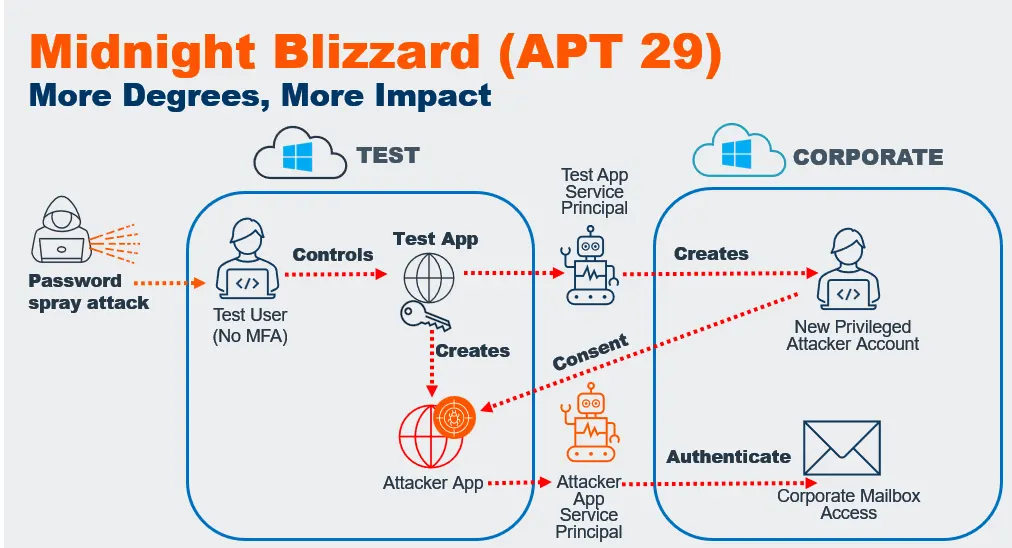
In most cases, attackers enter a system with the ultimate goal of reaching a high-value target (e.g., sensitive resources, high-privileged entitlements that would enable significant system impact, etc.). But the initial access vector and point where an attacker enters the system is rarely their intended final destination. So, they must move laterally and/or escalate privileges throughout the organization’s systems / domains, until they gain enough privileges to reach a valuable target.
By proactively understanding blast radius, teams can better visualize their system architecture and its potential pitfalls if an attacker were to attempt to move across environments and / or escalate privileged access. Understanding these potential pathways to privilege, and the damage that could be inflicted if they were abused, can help teams put containment measures in place.
Misconfigurations in identity permissions, privileged access, and cloud access can especially increase blast radius in the case of an attack, as they allow attackers to abuse legitimate pathways built into the system (intentionally or unintentionally).
What Increases Blast Radius
Some key factors that can increase the potential blast radius of a cyberattack include excessive permissions, standing privileged access, flat networks / weak segmentation, and unmonitored identities / access paths.
Excessive permissions and entitlements are an identity and access management (IAM) related risk that can increase blast radius. The more accounts that have access to high-privilege permissions or sensitive resources, the more likely it is that one of these accounts could become the weakest link, and enable an attacker to misuse the account for illicit actions. Broad cloud entitlements, in particular, are an important threat to note, with the Cloud Security Alliance (CSA) ranking misconfigurations such as enabling too many cloud access permissions and overly permissive access to virtual machines, containers, and hosts as the #1 threat to cloud computing.
Standing privileged access, which is when elevated access remains available outside the time needed to perform a specific task, can also increase blast radius. By leaving elevated access on indefinitely, organizations drastically increase the window of opportunity in which an attacker could abuse permissions to perform an attack.
Flat networks / poor segmentation, which is when networks are not segmented properly and attackers can move broadly between systems or identities. This type of lateral movement means an attacker could enter a system at one weak point, and potentially use this foothold to launch activities that would allow them to expand access to other areas via this single weakness or vulnerability. 90% of leaders report lateral movement incidents within the past 12 months.
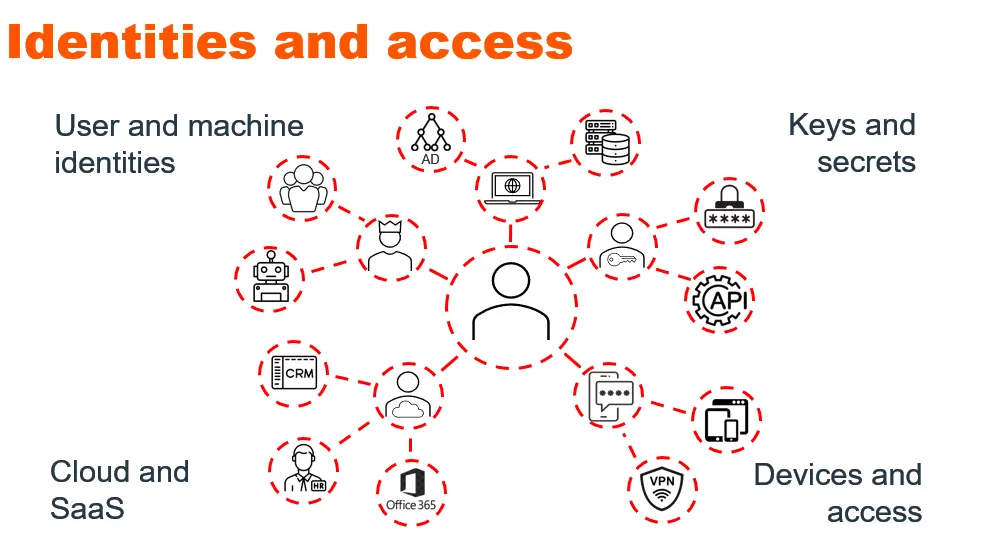
Unmonitored identities / access paths: While many organizations monitor the privileged accounts and activities within each of their domains, they are missing a big piece of the puzzle if they are not monitoring cross-domain pathways: the ways in which identities gain and use privileges across interconnected systems.
How to Reduce Blast Radius
Organizations can reduce blast radius through several cybersecurity best practices, including least privilege, just-in-time access, credential hygiene / management, system segmentation, and effective vulnerability management. Embracing a zero trust architecture (ZTA) and principles provides an effective foundation. One of the primary goals of zero trust is to minimize the blast radius and the attack surface.
1. Apply least privilege
Least privilege limits which resources and permissions identities (both human and non-human) can access. This foundational security principle is core to zero trust and pivotal to minimizing the attack surface and its blast radius. The principle of least privilege (PoLP) advances the premise that every user, system, service, etc. should only gain the minimal level of access and permissions to perform their allocated roles.
A few security solutions can help organizations apply least privilege, including:
Privileged Access Management (PAM), which monitors and protects how privileges are obtained and used. PAM solutions can help organizations restrict elevated access rights and permissions to only what is actually needed for each identity’s allotted roles.
Cloud Entitlement and Infrastructure Management (CIEM), which monitors and enforces the cloud permissions, entitlements, and activities of entities within the cloud, ensuring that they only have the minimum access and rights needed to perform activities.
2. Use just-in-time access
Just-in-time (JIT) access means only granting elevated access for the finite duration it’s needed for an approved task, and then revoking this access once the specific task is completed. CIEM features such as time-boxed role assumptions, permission bundling, and scoped policies can help organizations operationalize JIT access across multiple cloud and SaaS environments.
3. Segment systems and identities
Properly segmenting systems and identities can also make a significant impact in isolating impacted resources and reducing blast radius. Teams can implement system segmentation by grouping systems by risk level and business function, and leveraging technology such as VLANs, subnets, firewalls, access control lists (ACLs), etc., in order to control traffic between these zones.
Identity segmentation involves controlling access based on an identity’s role and attributes, rather than just by its network location. It complements system segmentation by going beyond segmenting systems with a broad perimeter, to also grant / deny granular access based on each identity’s specific intent, role, and task scope.
An emerging solution category, Identity Visibility and Intelligence Platform (IVIP), can help organizations define how identities should be segmented by combining identity data from across the organization into a centralized intelligence layer. This complete picture of how identities obtain and use privileges and entitlements, across disparate systems and domains, can help organizations better understand each identity’s scope and protect the various pathways to privileged access that exist.
Learn more about how BeyondTrust combines PAM, CIEM, IVIP, and ITDR into a single platform approach with the Pathfinder Platform.
FAQs
Privileged access can expand blast radius because an overprivileged identity can reach more sensitive systems if misused or compromised. Best practices such as least privilege, just-in-time access, and segmentation help reduce exposure by limiting what access exists and how long elevated access remains available.
One of the primary goals of zero trust architecture and principles is to minimize blast radius. Activities prescribed by a zero trust model, such as segmenting networks, applying least privilege, implementing just-in-time access, etc., will also minimize the blast radius of a potential attack.
Identity blast radius is the scope of systems, data, and resources an identity can affect through its assigned permissions and access paths. It increases when users, service accounts, or workloads hold broad access, standing privileges, or unmonitored entitlement paths.
Identity security plays a crucial role in minimizing blast radius by enforcing the principle of least privilege, operationalizing just-in-time access for every identity, and providing contextual data for granularly segmenting identities based on role and scope.
Granting just-in-time access is a strategic move to limit the blast radius within a cloud environment or a network. By only providing users with the access they need for a temporary period, organizations can minimize the potential damage if that particular user's credentials were compromised. With JIT access, even if there is a breach, the impact would be limited, and the potential disaster can be quickly contained.
“Blast radius” refers to the scope of damage that would be caused in the case of a hypothetical cyber-attack, while “attack surface” refers to which entry points are exposed to an attacker. Reducing attack surface shrinks the number of “weak points” from which an attacker could enter a system from the outside, while reducing blast radius reduces the possible actions that an attacker could take once they have successfully entered a system.