

Birthright Access
What is Birthright Access?
Birthright access refers to the predefined set of digital permissions and entitlements automatically granted to a user when they join an organization or change roles within it.
This access is typically based on the user’s role, department, and responsibilities when mapped to applications, assets, and resources. In the context of Identity and Access Management (IAM), birthright access ensures users have the necessary permissions to perform their job functions from day one, without the need for manually assigning them, which can be burdensome and time-intensive for IT teams.
Why Does Birthright Access Exist?
Birthright provisioning exists to streamline the onboarding process, ensuring that new employees, or those transitioning to new roles, have immediate access to the resources they need. A key benefit of birthright provisioning is that it reduces downtime and enhances overall productivity by eliminating the wait for manual permission assignments.
Furthermore, birthright access can aid organizations in maintaining compliance with policies and broader regulatory requirements by standardizing access rights based on predefined criteria.
Who Needs Birthright Access?
Every organization that wants to ensure a smooth, consistent, and efficient onboarding process for its employees should consider implementing birthright access.
Birthright access provisioning is particularly crucial for large organizations with complex IT environments and numerous roles. Birthright access helps with:
New employees, who need access to basic tools, programs, and job-specific resources
Existing employees transitioning into new roles or departments
Contractors, vendors, third parties, and temporary workers who require limited access
Use Cases for Implementing Birthright Access
Common use cases for birthright access include:
Employee Onboarding: Automatically provision necessary access to new hires based on their role.
Role Changes: Adjust access rights automatically when an employee changes roles within the company.
Compliance: Ensure access rights are consistently applied in accordance with organizational policies.
Productivity: Minimize delays in access provisioning, enabling employees to immediately start contributing work.
Privileges: Provide privileged access to a user based on policy regardless of their state during the joiner, mover, leaver, (JML) process.
What are the Security Risks of Birthright Access?
While birthright access streamlines processes, it can pose security risks, if not properly managed. The main risks include:
Overprovisioning: If the predefined access rights are too broad, users may receive more permissions or privileges than necessary. This increases the risk of unwanted access. For instance, threat actors may leverage an over-provisioned digital identity to wreak havoc, steal data, or further compromise systems.
Stale Access: Users who leave the organization or change roles may retain access rights they no longer need, posing a security threat. If organizations do not adequately manage the joiner, mover, and leaver (JML) process, there’s the risk of threat actors leveraging orphaned accounts—and abusing the leftover privileges and access rights. Attackers can find these often forgotten, or neglected, accounts to set up footholds on corporate networks. The attackers can then leverage any remaining permissions to pivot laterally around the network and look for ways to further escalate privileges.
Insufficient Auditing: Without regular access reviews and audits, inappropriate access rights may go unnoticed, leading to potential security breaches.
Most companies have a concrete identity lifecycle management process—a subset of Identity Governance and Administration (IGA)—for deactivating user accounts once they are no longer needed. This deactivation of access is referred to as ‘de-provisioning.’
This process may be initiated when the employee or vendor user is transitioning into a new role within the organization, is no longer employed by the organization, or has discontinued using their account for other reasons.
By integrating IAM, PAM, and IGA platforms, organizations can effectively manage birthright access, balancing the need for productivity with stringent security requirements. These technologies streamline access management, reduce administrative overhead, and enhance the organization's security posture.
Best Practices for Managing Birthright Access
Implementing birthright access effectively requires a strategic approach to define and enforce policies.
To accomplish this, organizations should put a focus on defining roles and permissions, regular auditing, and adherence to the principle of least privilege. Listed below are some best practices for implementing birthright access:
Clear Roles and Permissions: Ensure roles and associated permissions are well-defined and regularly updated to reflect current organizational needs.
Principle of Least Privilege (PoLP): Apply the principle of least privilege—preferably in adherence to a just-in-time (JIT) access model, where a user is granted granular access to the permissions or resources necessary to perform their tasks, only for the finite amount of time needed.
Automated Provisioning and Deprovisioning: Utilize automated tools to manage Birthright Access, ensuring timely updates and revocations.
Regular Monitor, Audit, and Review: Conduct periodic reviews of access rights to identify and revoke unnecessary permissions. Additionally, continuously monitor access patterns and review permissions to detect and address any anomalies or security risks.
Provisioning Birthright Access in the Cloud
The adoption of cloud technologies has transformed how organizations manage access to their resources. Birthright access in the cloud context refers to the automatic granting of permissions and entitlements to cloud-based applications and services when a new user joins the organization.
So, how do organizations go about implementing birthright access for cloud environments? The answer is dependent on the types of cloud resources a new user needs to perform the duties outlined in their role.
If the user is a member of the Help Desk, they will likely need remote access technologies that allow them to remote in to a customer’s device. On the other hand, if they are a Sales Engineer, they may need the ability to access privileged credentials or leverage SSH keys for remote file transfers, network management, and remote operating system access.
If these types of role assignments aren’t stringently managed or outlined thoughtfully in birthright access policies—especially in regards to privileged access or credentials—there is risk for a proliferation of standing privileges among users, and subsequently, greater risk for threat actors to abuse them.
Below are key capabilities to look for in software that can improve the implementation of cloud birthright access:
Comprehensive Privileged Account and Credential Management: Protects human and machine privileged identities from account hijacking, credential re-use, exposed passwords, lateral movement, and privilege escalation. This type of PAM software should also minimize risks by onboarding privileged accounts, securing access to passwords, DevOps secrets, certificates, API keys, tokens, and SSH keys.
Automated Discovery and Onboarding of Privileged Assets: Scans, identifies, and profiles applications and assets (including SSH keys) with auto-onboarding of privileged, shared, and service accounts—ideally with the ability to automate repetitive tasks.
Just-in-Time Access Control: Provisions the minimal necessary privileges and access needed—only to the appropriate application or process, and only for the finite duration needed or allotted to perform an activity or set of activities.
Application Control: Provides oversight and control over what users can install or run.
These PAM approaches, when implemented correctly with the right toolsets, help ensure employees have immediate access to the necessary cloud resources to perform their roles effectively from the outset.
Key Birthright Provisioning Considerations for the Cloud
Cloud environments offer scalability, which is imperative for managing birthright access. As organizations grow and roles shift, cloud-based IAM systems, including PAM and IGA technologies, can recalibrate access rights without significant manual intervention. Flexibility in these systems allows for dynamic adjustments of access permissions based on real-time changes in user roles or organizational needs.
IAM solutions in the cloud often leverage automation to streamline the following:
The provisioning and de-provisioning processes, reducing the administrative burden on IT staff and ensuring timely and consistent access management.
The implementation of just-in-time access, where users receive permissions only when they need them, further enhancing security by minimizing standing privileges.
Leveraging multi-factor authentication (MFA) (ideally phishing-resistant MFA, like FIDO2), encryption, and continuous monitoring are incorporated to better protect against unauthorized access.
Implementing the principle of least privilege is critical in cloud environments to reduce the attack surface.
Additionally, birthright access policies should always be configured to grant the minimum necessary permissions required for users to perform their tasks.
Cloud environments often have stringent compliance requirements. IAM systems in the cloud provide robust auditing and reporting capabilities to ensure access controls meet regulatory standards. IGA security platforms in the cloud help maintain compliance by enforcing policies, conducting regular reviews, and generating detailed reports on access activities.
Modern cloud IAM solutions often provide seamless integration with various cloud service providers, such as AWS, Azure, and Google Cloud. Integration ensures that birthright access policies are uniformly applied across all cloud resources. This, in turn, facilitates the centralized management of access rights, making it easier to enforce consistent security policies and streamline user access across different cloud platforms.
Dynamic Nature of Cloud Environments
The dynamic and scalable nature of cloud environments requires continuous monitoring and adjustment of access rights. Automated tools and machine learning algorithms can assist in identifying and mitigating potential security risks associated with birthright access.
By carefully managing birthright access in the cloud, organizations can harness the benefits of cloud technologies, while maintaining robust security and compliance.
Simple, Secure Birthright Access - Next Steps
Interested in simplifying birthright access rights, streamlining cloud permissions access, and enforcing identity security best practices? Contact us today.
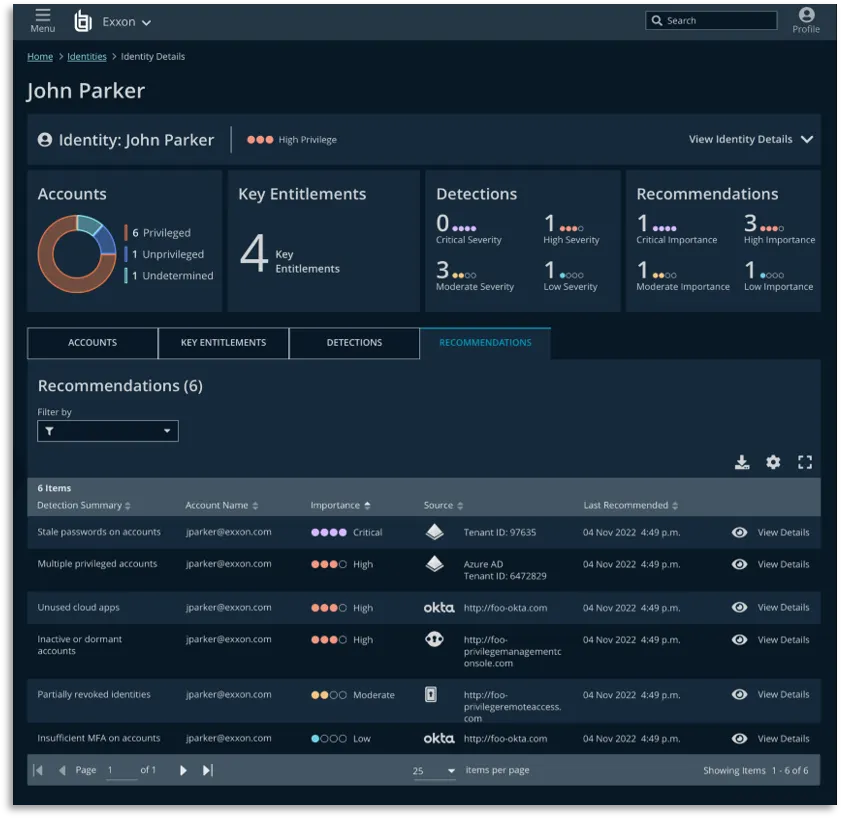
Discover all Identities, Their Permissions, & Prioritize Identity-based Risks Now
Visualize your entire identity attack surface through a single pane of glass. Start with an Identity Security Assessment and 30-days of free threat monitoring.