

Cybersecurity as a Boardroom Priority for Major African TelCos


Cybersecurity as a Boardroom Priority for Major African TelCos
The transition from a traditional TelCo to a TechCo is a high-stakes evolution that expands an operator’s digital footprint and threat surface. This blog examines why foundational controls are no longer enough to protect the privileged pathways spanning IT, OT, and AI-driven environments. Discover how a privilege-centric identity security strategy allows major African operators to protect critical infrastructure and sustain growth.
Strengthening Visibility, Intelligence, and Protection Across All Operating Companies
Cybersecurity is no longer just a back‑office issue for major African telecommunications companies that operate across a variety of IT/OT environments. Today, it’s a boardroom priority that determines whether strategic ambitions succeed or fail. In its latest reporting, one of Africa’s largest operators highlighted Cybersecurity and Digital Safety as a strategic priority in its own right—a core factor impacting the organization’s ability to create, preserve, and protect value.
Cyberattacks against TelCos can result in:
Service disruption and loss of availability
Financial and reputational damage
Increased regulatory scrutiny
Erosion of trust with customers, partners, and governments
As operators advance toward their 2030 plans, it becomes even more critical to address these risks. Shifting from a traditional TelCo to a TechCo expands digital footprint, operational complexity, and reliance on software‑driven platforms, automation, and AI.
Foundational controls alone are no longer sufficient to protect these complex environments or contain the blast radius of an incident. A holistic, modern cybersecurity strategy has become a fundamental enabler of resilience, trust, and sustainable growth, supporting the organization’s transformation end-to-end.
In this blog, we outline the cybersecurity pillars that matter most for TelCos operating at scale and explain why they’re essential to resilient growth in an AI-driven industry.
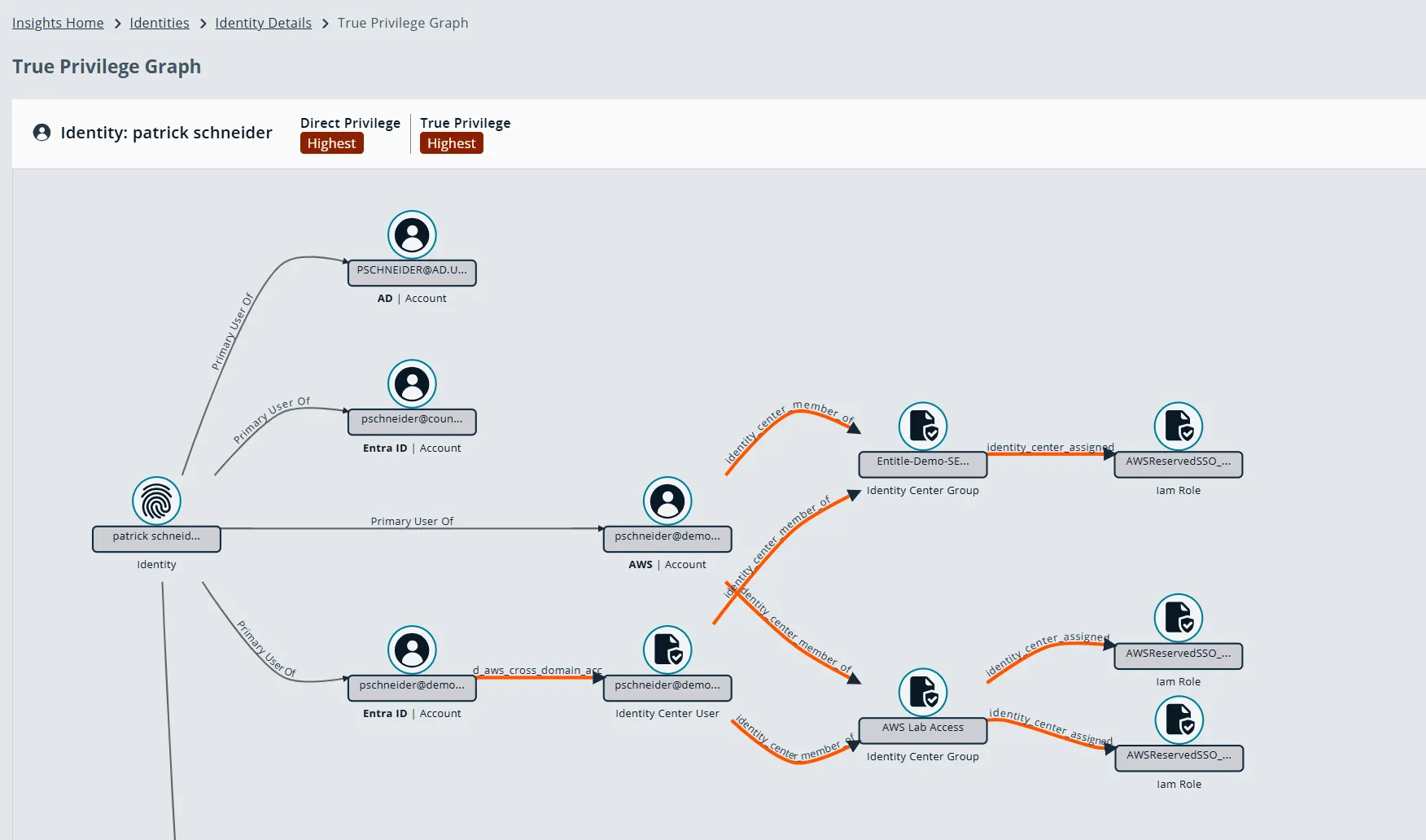
Defining Paths to Privilege™
To strengthen cybersecurity and digital safety at scale, operators must evolve beyond static, inconsistent access controls toward continuous visibility, privilege governance, and actionable insights—both at the operating‑company (OpCo) level and centrally.
As operators operationalize AI, scale hybrid infrastructure, and strengthen data sovereignty, every direct or indirect way to achieve privileged access—what we refer to as Paths to Privilege—becomes a potential point of exposure. Some of these pathways are known, while others are hidden, but all can span across IT, OT, cloud, and AI environments. Securing these privilege pathways is essential to delivering solid cybersecurity outcomes in a TechCo operating model.
OT Environments: A Critical but Often Underestimated Cyber Risk Domain
While cybersecurity discussions often focus on IT systems and digital platforms, Operational Technology (OT) environments represent a distinct and material risk domain for African TelCos. OT directly underpins network availability, digital services, and fintech enablement across markets, supporting:
Radio access and core network operations
Fibre, transmission, and international connectivity
Data centres and digital infrastructure
Power, energy, and environmental control systems
Platform infrastructure for digital and fintech services
Any disruption, misuse, or compromise in these environments can immediately affect service delivery and customer trust. Therefore, securing OT means protecting availability and safety in environments that often weren’t designed to withstand today’s threat landscape—while still enabling engineers and third parties to do their jobs.
Reducing OT Risks with Privilege-Centric Identity Security
A privilege‑centric identity security approach reduces OT risk by controlling and monitoring privileged access into critical systems. It enables secure remote access without exposing fragile OT networks, enforces least privilege with just‑in‑time (JIT) elevation, and records sessions to ensure accountability and accelerate incident response.
Where OT access paths aren’t fully understood, BeyondTrust’s Identity Security Risk Assessment (ISRA) can help baseline current remote access exposure and identify quick wins.
Privileged Access: The New Risk Frontier
Across OT, IT, cloud, and increasingly AI‑driven environments, privileged access is one of the most significant risk vectors for the following reasons:
Elevated Access: OT systems require elevated access for maintenance, upgrades, and incident response
Third-Party Risk: Access is frequently extended to third‑party vendors, OEMs, and contractors
Visibility Gaps: Legacy tools often lack real-time visibility and behavioral oversight
Non-Human Identities: AI agents and automation frameworks introduce powerful identities operating at machine speed
The core risk is no longer simply who has access, but what privileged identities (human or machine) can do inside the most critical environments—and whether that activity introduces cyber, operational, or regulatory risk.
In practice, this is where many large-scale cyber incidents accelerate: an attacker (or compromised vendor account) gains privileged access, then uses it to move laterally, disable controls, and impact services.
Examples of Recent Cyber Incidents on African TelCos
Date | Geographical Area | Attack Type | Consequences | Estimated Cost / Impact |
|---|---|---|---|---|
Q2 2025 | Pan Africa | Credential Compromise | Unauthorized access to personal customer data across multiple markets. Core systems remained available, but a mass password reset was mandated across the user base. | Reputational damage; significant forensic and customer notification costs across multiple markets. |
H1 2025 | South Africa | Ransomware | Unauthorized access to unstructured data at year-end 2024; data published on the Dark Web in early 2025 after ransom refusal. | Massive data leak; exposure of thousands of customers' PII records. |
Q4 2024 / Q1 2025 | South Africa | Ransomware/Extortion | Sensitive billing and personal data of senior government officials leaked to force payment. Systems experienced prolonged operational disruption. | High-level political risk; systemic operational downtime lasting several weeks. |
Q4 2024 | East Africa | Gateway/API Exploitation | Attackers used a third-party gaming platform as a gateway to drain mobile money central systems. Thousands of SIM cards were used for bulk withdrawals. | Multi-million USD direct financial theft from customer mobile wallets. |
Q1 2024 | Pan Africa | DDoS | Coordinated hacktivist attack knocked major mobile providers offline to protest geopolitical ties. | Total service blackout for several hours during peak trading periods. |
Q4 2024 | South Africa | Internal Fraud/Vending Breach | Criminals (potentially with insider assistance) exploited the Online Vending System to generate fraudulent electricity tokens. | Estimated hundreds of millions of rands in non-technical losses. |
Closing the Identity Gap with Privilege-Centric Identity Security
A privilege‑centric identity security approach helps operators close this gap by securing and governing privileged identities end-to-end: centralizing and protecting credentials and secrets, enforcing least privilege with just‑in‑time access, enabling secure remote access for employees and third parties, and monitoring/recording privileged sessions to deliver real‑time insight and audit‑ready traceability.
If you want to validate this approach quickly, a 14-day free trial of BeyondTrust Privileged Remote Access can demonstrate secure, monitored remote access and privileged session accountability in a controlled pilot.
Reducing Shadow IT Risk: Bringing Ungoverned Tools, Accounts, and Automation Back Under Control
As operators accelerate their TechCo journey, shadow IT becomes a material cybersecurity and digital safety concern. It shows up as unsanctioned SaaS and AI tools, unmanaged scripts and automation, ad hoc admin accounts, personal devices accessing sensitive environments, and “quick fixes” deployed outside standard change and identity governance. These assets create blind spots where privileged actions can occur without security oversight, leading to:
Unmanaged identities and credentials (including shared or hard‑coded secrets) that bypass least privilege controls.
Unapproved connectivity paths into IT/OT environments, increasing lateral movement and ransomware exposure.
Data leakage and sovereignty risk when sensitive data is processed in unvetted cloud or AI services.
Audit and compliance gaps because activity is not recorded, attributable, or policy enforced.
Preventing Shadow Risk with Privilege-Centric Identity Security
Privilege‑centric identity security helps prevent shadow IT from becoming shadow risk by making privileged access discoverable, controllable, and auditable—even when teams move quickly. In practice, this means:
Discovering privileged pathways across servers, cloud, and OT jump points to reduce blind spots and unmanaged admin access.
Enforcing least privilege and just-in-time elevation so “temporary” workarounds don’t turn into permanent standing access.
Securing and rotating credentials/secrets to remove shared passwords and hard-coded tokens used by scripts, bots, and automation.
Recording and monitoring privileged sessions (including vendor access) to ensure accountability, faster investigations, and stronger deterrence.
Producing audit-ready evidence that demonstrates who did what, when, and why—supporting OpCos and central governance.
A useful way to see how privilege-centric identity security works is through the framework of VIP: Visibility (knowing what you have and who can reach it), Intelligence (understanding what “good” looks like and spotting risky behaviour), and Protection (enforcing least privilege and controlling high‑risk access paths). Put simply: you can’t protect what you can’t see.
If you suspect shadow IT is creating hidden access paths—or you simply want an evidence‑based baseline—our Identity Security Risk Assessment maps remote access entry points, identifies unmanaged privileged access, and prioritizes remediation actions across OpCos while improving central visibility.
Fintech Cybersecurity Risk: Focusing on Mobile Payment Solutions
The millions of users on mobile money and fintech platforms represent a significant growth opportunity for major African operators. Sitting between IT and OT environments, fintech services amplify the importance of cybersecurity and digital safety for the following reasons:
Fintech services depend on highly available infrastructure
Privileged operational activity can directly impact transaction continuity
Regulatory expectations for access control and auditability are heightened
By strengthening visibility and control of privileged access across IT and OT environments, an operator materially reduces fintech-related cyber and operational risks—ensuring digital financial services remain trusted, resilient, and compliant, without making them the focal point of the security strategy.
Why Identity Security Matters for Telecommunication Orgs
By embedding continuous visibility, controlled privileged access, and actionable cybersecurity insights across AI, cloud, IT, and OT environments, operators can:
Anticipate cyber threats rather than react to them
Protect critical infrastructure and customer trust
Demonstrate mature, defensible cybersecurity governance
Sustain digital and fintech growth across Africa
This directly supports cybersecurity and digital safety strategies for African TelCos, reinforcing an operator’s ability to create, preserve, and protect value. Non-negotiables include:
Securing human and non‑human privileged identities
Providing continuous cybersecurity insights across all OpCos
Automating audit response and regulatory evidence
Supporting TechCo transformation without creating identity debt
For major African TelCos, cybersecurity is no longer optional; it underpins service resilience, regulatory confidence, and customer trust. The practical priority is to make privileged access visible, governed, and auditable across IT, OT, and AI-driven environments—so every Path to Privilege is understood, controlled, and accountable.
If you’re ready to reduce risk across OT, IT, and cloud without slowing down delivery, you can start with the following next steps:
Map your exposure and prioritize remediation
Our Identity Security Insights Assessment is designed for operators who need an evidence-based baseline of their security posture. We help you identify hidden access paths, unmanaged privileged accounts, and shadow IT entry points across IT and OT environments.
Experience how a privilege-centric approach can transform your operations
BeyondTrust Privileged Remote Access allows you to pilot secure, monitored, and auditable remote access for vendors and internal teams in a controlled environment, without the need for complex VPNs.
About the Author
Michael Byrnes
Michael Byrnes is the Director, Solutions Engineer iMEA for BeyondTrust. He has acquired a wealth of cyber security experience in a number of engagements over the last 10 years with a diverse set of IT companies across the Middle East. Thanks to his various roles as a security consultant, a systems engineer or within pre-sales, he gained extensive expertise in network and information security, architecture design and virtualization. Within his current position at BeyondTrust, Michael manages the solution engineers’ team in the Middle East, India and Africa. With his group, he engages and advises partners, customers and prospects in their Privileged Access Management (PAM) strategy to secure and manage their entire universe of privileges.