

Top Cybersecurity Trend Predictions for 2025+: BeyondTrust Edition


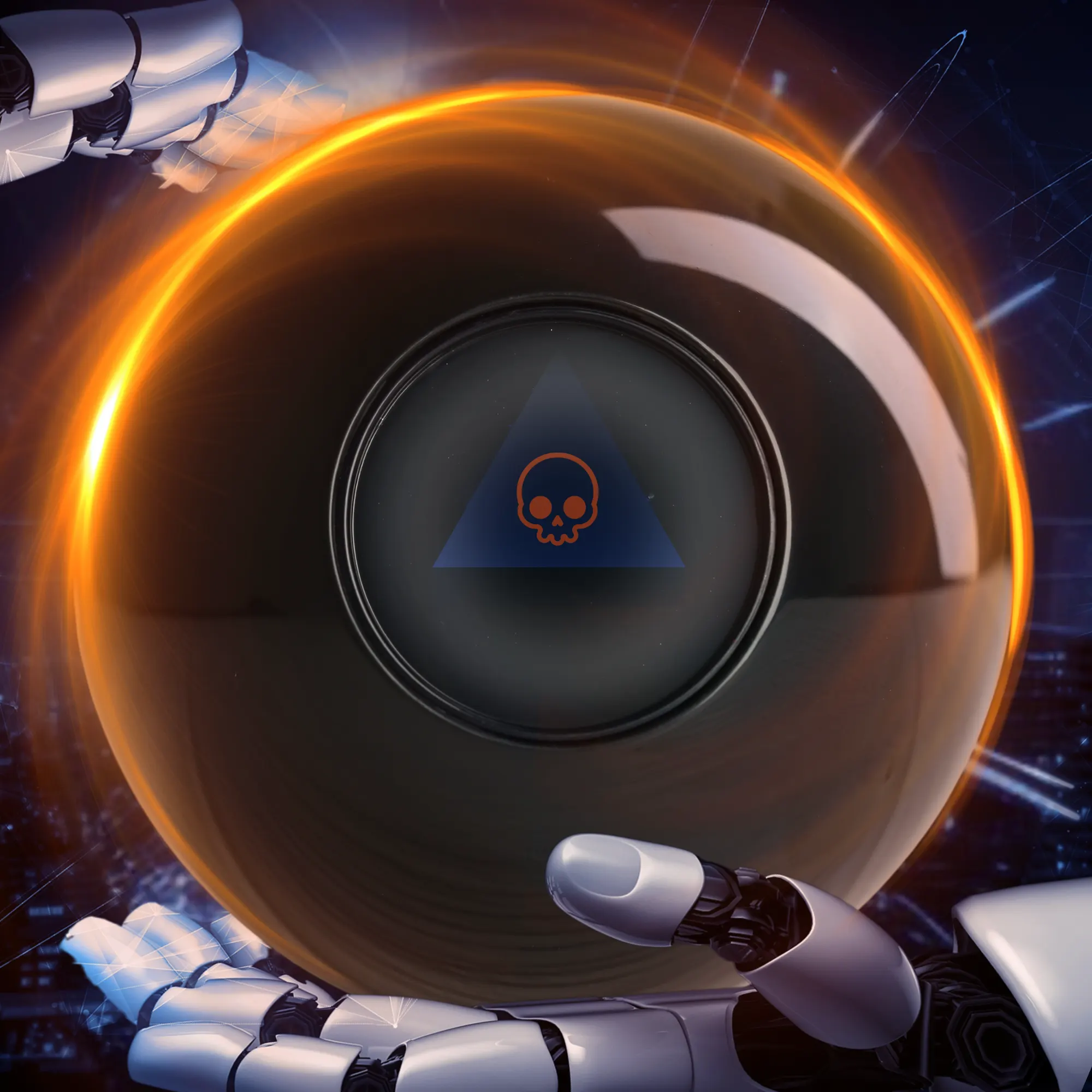
Top Cybersecurity Trend Predictions for 2025+: BeyondTrust Edition


For this edition of our annual cybersecurity trend predictions, we’re sharing our top prognostications for 2025, as well as a glimpse into the key emergent trends we foresee taking hold in the remainder of the decade.
Predicting the Future Cybersecurity Threats with the Greatest Potential for Disruption
Authors: Morey J. Haber, Chief Security Advisor; Christopher Hills, Chief Security Strategist; James Maude, Field Chief Technology Officer; and Mike Machado, Chief Information Security Office
We’re nearing the end of 2024 and the midpoint of the roaring twenty-twenties. So far this decade, we’ve had everything from high-stakes cyberattacks and world-stopping technological malfunctions to a global pandemic. As we look ahead to 2025, we need to contemplate the cybersecurity trends coming into focus and start planning for those yet to take shape.
For this edition of our annual cybersecurity trend predictions, we’re sharing our top prognostications for 2025, as well as a glimpse into the key emergent trends we foresee taking hold in the remainder of the decade.
But first, let’s take a brief moment to consider where we stand. The cybersecurity landscape is clearly in another phase of rapid evolution. Last year, AI (artificial intelligence) achieved significant technological breakthroughs, drastically altering the course of the threat landscape and pushing organizations to rethink security strategies. This caused a surge of defense tools that leverage AI and ML (machine learning) to advance threat detection and response.
We are already seeing another technological innovation making its way into mainstream adoption: quantum computing. For years, this has been on the distant horizon, but now it’s finally seeming closer to reality. Quantum computing has the potential to wreak unprecedented levels of disruption, posing a massive challenge to the traditional cryptographic methods widely deployed today.
In recent years, we’ve also witnessed a shift in how threat actors penetrate environments. More emphasis on identity-based tactics has encouraged cybersecurity practitioners to reconsider their definitions of “privilege” and “identity security” and focus their defensive strategies on reducing the blast radius of compromised accounts.
In the midst of all this, political tensions have risen, making the potential ripples of nation-state cyberattacks more global-reaching than ever.
With so much on the horizon, it’s critical for organizations to stay vigilant and keep their security strategies tuned in to the latest trends. Please join us as we explore what will redefine the cybersecurity landscape in 2025 and beyond.
Recapping BeyondTrust’s 2024 Cybersecurity Predictions
Last year, BeyondTrust predicted some substantive changes in the cybersecurity landscape, driven by emerging AI threats, the increasing sophistication of ransomware, and the need for stronger identity trust chains. Here’s where we saw those predictions land:
As expected, the evolution of AI threats took center stage, with AI democratizing hacking by enabling even low-level attackers to generate more effective phishing emails and malware. We also saw AI introduce a number of new attack vectors, including the automation, obfuscation, and randomization of malware, which made it much harder to detect.
Our prediction that exploit mapping in ransomware would become a key tactic for threat actors came true. This past year, we started seeing attackers map entire networks before striking, auctioning off the access they gained to the highest bidder. This also exposes organizations to the danger that attackers will keep coming back to exploit again after an initial breach—even after you think you’ve resolved the issue.
Changes to how attackers took advantage of identity trust chains did, in fact, take on a crucial focus in 2024. With traditional methods, like MFA, being bypassed, and attackers increasingly targeting session tokens, API keys, and other aspects of identity security, the need for continuous verification became paramount.
Cybersecurity Trends for 2025
Now, let’s delve into what’s on the way in 2025.
1. AI2 Bursts its Bubble, Bringing Down the Hype of the AI Threat
The Artificial Inflation (AI) of Artificial Intelligence (AI)—or AI2—has already peaked in 2024. Watch as the bubble relentlessly bursts across multiple verticals throughout 2025.
While some of the promises of AI have come true, and technology (like ChatGPT and its plugins) will continue to impress with its capabilities, AI-based technologies have largely failed to live up to the mountainous hype.
Select markets, tools, and technology are truly benefiting from AI, but in many circles, the terms “AI-enabled” or “AI-driven” are overused and inappropriately promised. An implication here is that these terms will continue to take on more negative connotations that could actually hurt marketing of the product or capability with which it’s associated.
In 2025, we expect the industry to pull back on the promises, investment, and hype of new AI capabilities and settle down into what is real versus marketing noise. We’ll see narrow AI (not Artificial General Intelligence–this is decades out, at best guess) settle into industry use as a tool angled for basic security and AI workflows. Some examples might include automating the creation of products, streamlining supply chain workflows, and reducing the complexity and skill level needed to perform certain tasks, based on security best practices outlined by models like ATLAS from MITRE.
We can expect to see basic attacks continue their 2024 pattern of increase because AI lowers the barrier of entry. That said, generative AI will not substantively increase the frequency of advanced, targeted, bespoke attacks in 2025.
2. Organizations Grapple with Schrödinger's Quantum Computing Threats
Much like the paradox of Schrödinger's cat, quantum computing threats will simultaneously exist in two states in 2025. Quantum computing capabilities will likely serve as a decryption engine, laying obsolete many tried and trusted defenses. Larger organizations will seek to prepare themselves for this demise of encryption standards in a post-quantum computing world, while recognizing that the threats don’t actually exist yet. It will be theory versus reality.
Following the release of NIST’s post-quantum encryption standards, many larger organizations—especially those in financial services—will begin the long transition to adopt the new standards. Although the complete integration of the new algorithms will likely take many years, it’s important to begin the journey now, before quantum threats break into the mainstream (potentially by the end of the decade).
NIST’s post-quantum encryption standards are the product of eight years of research and development, during which 69 candidate encryption algorithms were submitted to see which could withstand cyberattacks from a quantum computer. Only 4 won (CRYSTAL-Kyber, CRYSTAL-Dilithium, FALCON, and SPHINCS+), reinforcing the need for new standards that protect against future quantum-computing and encryption threats.
Similar to what we have seen with the NIST Zero -Trust and NIST CSF frameworks, by 2027, we can expect to see NIST’s post-quantum encryption standards become mandated across governments, military, and supporting business entities, as a part of national security.
3. Planned Obsolescence Forces Electronic Exodus
In October 2025, we’ll see one of the most significant end-of-life (EoL) announcements since Windows XP. Microsoft has plans to end-of-life Windows 10 (completely and for good—unless you are willing to pay for extended support). This means hundreds of millions of systems will lack the hardware requirements for Microsoft’s newest OS and be unable to upgrade to Windows 11. Those systems will become obsolete, and many will end up in landfill.
Much of the hardware we use today simply cannot be upgraded due to dependencies on hardware and software security features. Only new computers with both Secure Boot and TPM will be supported, and able to migrate to Windows 11—unless Microsoft chooses to remove these restrictions (highly unlikely, even though there are workarounds). Operating systems updates and security patches will cease to be generally available for these noncompliant systems, which, consequently, will become increasingly vulnerable over time.
Thus, a flood of perfectly functional, but vulnerable and obsolete notebooks, laptops, and desktop computers, will go up for sale or recycling in the second half of 2025. As a result, the hardware market will get a much-needed boost, including a switch to ARM processors.
We can also expect to see a significant increase in the use of alternative desktop operating systems, like Linux, Mint, or Ubuntu Desktop, as organizations and individuals seek to minimize the cost of hardware replacement.
4. Clone Wars: Reverse Identity Theft Begets Digital Doppelgangers
Expect to witness a rise of reverse identity theft, where all the breach data stolen over years past is improperly merged with additional data and assumptions of who you really are to create faux personas of your digital identity.
Almost everyone is aware of the concept of identity theft. Entire businesses are built on identity threat detection and the protection of services and financials. However, reverse identity theft is a relatively new concept. It occurs when your identity is falsely associated with another identity that is not yours.
Reverse identity theft can happen when someone else uses your email address or phone number (by mistake or intentionally) to sign up for something, resulting in all their personal information being sent to you. In a more advanced form, reverse identity theft can involve the electronic and public linkage of an alias—or other identity—to your own without your knowledge, for some nefarious mission.
Threat actors are already merging data incorrectly based on name or other common fields due to the vast number of data breaches that make this information available. For people with common names, it can result in faulty collection claims, errant emails, and other annoyances. For others, it can be a case of extreme mistaken identity or accusations of having a doppelganger. If you think this is outrageous, go down the rabbit hole of John Titor and explore which one of the authors has been accused of reverse identity theft.
5. Dangers of Vulnerable Critical Infrastructure Being Targeted by Nation State Cyber Warfare Increase
While verticals like healthcare and financials will continue to be focal points for attacks, in 2025, we can expect critical infrastructure to become a significantly higher priority for nation-state threat actors. This will include the inherent risks (and the potential for nation state cyber warfare) elevating critical infrastructure attacks to levels of national security.
Threat actors typically target environments with the least resistance and easiest political or financial gains to achieve their nefarious missions. Aging equipment, the lack of cybersecurity funding, and lack of maturity around cyber security best practices make critical infrastructure an easy target.
The current vulnerability of critical infrastructure and its potential for political risk is already a matter of awareness, with rising geo-political turmoil slowly increasing focus. However, it will only take one successful breach to cause the loss of life or service that will raise these types of attacks to the level of national security.
With the current flaws in OT and IT environments, it is probable that we will see a significant incident of this type unfold in 2025. It will take government funding and mandates to ensure public critical infrastructure services don’t become the next historic disaster.\
6. Moonlighting and AI Assistant Uprising
Remote working has had some unintended consequences, such as an increase in “overemployed” workers concurrently taking on two or more remote jobs—in some cases, illegally.
Expect to see remote employees increasingly outsource key tasks to personal AI assistants —without an employer's knowledge or approval—and potentially even the creation of entirely fake employees. This moonlighting and uprising of AI assistants will grow more prevalent in those less technology-aware businesses that are outsourcing content creation, or basic data workflows, that can be almost entirely automated.
In the end, honest remote workers and contractors may collect wages from multiple organizations without disclosing that their output is based on an AI license versus original, human content. It will be up to employers to vet these practices and ensure contracts cover liability and exclusions.
7. Hidden Privilege Escalation Pathways Become the New Cybersecurity Battleground
In 2025, organizations will face more identity compromises that, initially appear insignificant at the outset, but represent access pathways that allow an attacker to assume control of significant resources through privileged escalation. These major threats will metastasize out of seemingly minor identity issues such as hidden, convoluted, or otherwise non-obvious trust relationships, misconfigurations, or granting of obscure entitlements.
Attackers will continue to innovate and show enhanced understanding of cloud permissions, roles, and entitlements that allow them to gain the upper hand against defenders who weren’t even aware of the risks.
Unfortunately, these attacks will escalate in 2025 and use traditional attack vectors for exploitation. These will range from misconfigurations to spray attacks (all preventable), and much more.
The open opportunity for threat actors to gain privileged access based on low level accounts will lead security professionals to re-evaluate their hygiene so they can prevent attacks via lateral movement.
8. Too Much of a Good Thing? High Cybersecurity Investments Overwhelm Security Practitioners
In 2025, cybersecurity will remain a key investment, but those investments may not measurably improve security outcomes.
We can expect to see investments in security continue along their current trend, focusing on point solutions rather than improving end-to-end security. We can also expect to see even more tools, applications, and software emerge to address nascent attack techniques and technology domains.
However, this strategy of increasing security investment by adding more security tools won’t typically translate into a meaningful security reduction impact. The reason? These tools won’t integrate seamlessly enough with other solutions nor share data amongst other solutions from the same vendor.
The addition of more tools that don’t interoperate well will exacerbate reporting and visibility challenges for security teams. Ultimately, this effect will create more security gaps, attack vectors, and paths to escalate privilege for threat actors to exploit, while also contributing to inefficiencies and productivity drags.
9. Cyber Insurance Requirements Play Catchup
Cyber insurance carriers and brokers have some serious revisions ahead of them, with regard to appropriately evaluating risk.
While many carriers have updated their Ransomware Supplemental Applications / Addendums to accommodate the evolving risks of an organization, we have not seen much movement around the adoption of AI and quantum computing.
Many organizations are creating acceptable use policies around AI usage, but many others have chosen not to block or restrict AI altogether. This latter response presents a liability risk surrounding consumer privacy, intellectual property, and other confidential information that could make its way into AI Large Language Models (LLM) and, ultimately, result in a breach.
Cyber insurers will need to address AI-related risks and the onset of quantum-computing when determining policies, risks, and renewals. This means we could start seeing new AI or quantum computing exclusions to cyber insurance policies—similar to Acts of War. Such policies could shield the carriers from loss due to AI or quantum computing related breaches. This will be especially true if organizations decide not to leverage the proposed quantum resistant encryption, and instead rely on existing technologies for safeguarding critical information.
Conclusion: Don’t Delay Your Security Preparations
If there’s one trend that has proven staying power, it’s the importance of preparing for what’s to come. In the words of Hunter S. Thompson, “A man who procrastinates in his choosing will inevitably have his choice made for him by circumstance.”
Research continues to show that enterprises with more proactive IT security postures prevent more threats, identify potential security issues faster, suffer fewer breaches, and minimize damage from attacks more effectively than less prepared organizations.
In the coming years, proactivity will involve adapting your security defenses to resist threats that pose increasing levels of disruption to security infrastructure itself. With the rise of quantum computing, that may mean pre-empting threats that don’t even exist yet. However, it also means pivoting quickly to adapt to security shifts already underway. For instance, it’s already easier for threat actors to log in than hack in, making identity security a high priority for today and the years ahead.
If you’re looking to get proactive about your cybersecurity posture, contacting BeyondTrust is a great place to start.
Cybersecurity Predictions from the BeyondTrust Archives
The BeyondTrust team has a long history of making security predictions. You can check out some of our past forecasts below to assess how we’ve fared!
About Our Authors
Morey J. Haber is the Chief Security Advisor at BeyondTrust. As the Chief Security Advisor, Morey is the lead identity and technical evangelist at BeyondTrust. He has more than 25 years of IT industry experience and has authored five books: Attack Vectors: The History of Cybersecurity, Privileged Attack Vectors, Asset Attack Vectors, Identity Attack Vectors, and Cloud Attack Vectors. Morey has previously served as BeyondTrust’s Chief Security Officer, Chief Technology Officer, and Vice President of Product Management during his nearly 13-year tenure. In 2020, Morey was elected to the Identity Defined Security Alliance (IDSA) Executive Advisory Board to assist the corporate community with identity security best practices. He originally joined BeyondTrust in 2012 as a part of the eEye Digital Security acquisition where he served as a Product Owner and Solutions Engineer since 2004. Prior to eEye, he was Beta Development Manager for Computer Associates, Inc. He began his career as Reliability and Maintainability Engineer for a government contractor building flight and training simulators. Morey earned a Bachelor of Science degree in Electrical Engineering from the State University of New York at Stony Brook.
James Maude is the Field Chief Technology Officer (FCTO) at BeyondTrust. With his broad experience in security research, both in academia and industry, James has spent the past decade analyzing cyber threats to identify attack vectors and trends in the evolving security landscape. He is an active member of the security community and hosts Adventures of Alice and Bob, a podcast that shines a light on the people making a difference in security. As an expert voice on cybersecurity, he regularly presents at international events and hosts webinars to discuss threats and defense strategies.
Michael Machado is an experienced security leader with more than twenty years of success in global companies ranging in size from pre-IPO to Fortune 100. As Chief Information Security Officer, he is responsible for the strategic planning, governance, and operational oversight of BeyondTrust’s information security program. He has extensive experience developing and leading security programs at high-growth technology companies. Mike’s prior roles include serving as Chief Data and Security Officer at Shippo, where he led their cybersecurity, fraud prevention, and data functions, and as RingCentral’s inaugural Chief Security Officer, where he planned and executed the company’s cybersecurity, fraud prevention, and trust strategies from pre-IPO through $1.3 billion in revenue. He also held various security leadership positions at both Cisco and WebEx. Mike holds a Bachelor of Science in Business Information Systems from the University of Phoenix, Carnegie Mellon's Chief Data Officer executive education certificate, and multiple security certifications.