
What Is a BEC Attack? Examples and Prevention

What Is a BEC Attack? Examples and Prevention
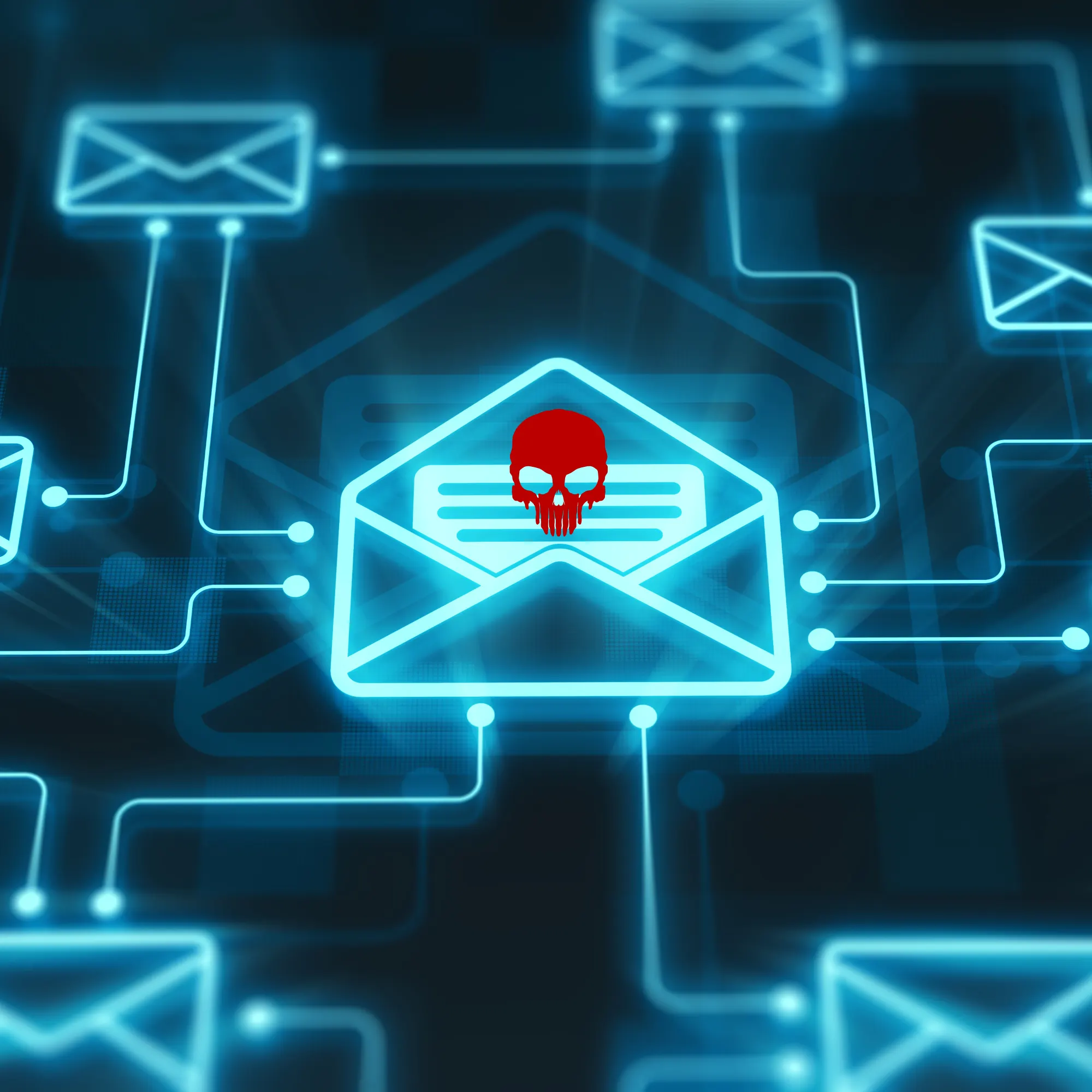
A BEC attack uses trusted email access or impersonation to trick employees into sending money, exposing sensitive data, or granting access. Once attackers gain email access, they can bypass weak 2FA, hijack password resets, and impersonate identities to steal money or sensitive data. In this blog, we break down the common tactics behind Business Email Compromise (BEC) and explain why protecting your email is ultimately about protecting your digital identity.
What Is a BEC Attack?
Business Email Compromise (BEC) attacks are a simple and highly effective form of a cyberattack that exploits human trust rather than technical vulnerabilities. In its basic form, it’s an email scam that is designed to trick employees, often into handing over money, secrets, or data, but the primary goal of a BEC is evolving with its tactics. Increasingly, the threat actor has their sight set on more than just those quick wins. They’re after your digital identity, the master key to your organization’s crown jewels.
How BEC Attacks Work
BEC attacks work by turning an inbox into a launch point for impersonation, password reset abuse, and email monitoring. Attackers do not always need complex exploits when email access lets them observe activity, intercept messages, and act as a trusted user.
This might be an unpopular opinion, but I firmly believe that if your email is compromised, it’s potentially game over for your digital identity. And the data backs me up. A recent 2024 report on trends in cybersecurity revealed that business email compromise (BEC) is now the number one-way criminals target organizations. Think about that. Not some zero-day exploit, but a simple, deceptive email. The report found a staggering 70% of businesses were targeted in these attacks last year.
This isn’t a future threat. It’s happening right now. It’s time we stopped treating our emails as just a communication tool and started seeing it for what it is: an entry point to our entire digital lives.
Why Are BEC Attacks So Effective?
BEC attacks are often effective because they exploit human trust, business urgency, and legitimate email identities instead of relying only on software vulnerabilities. Attackers have shifted their focus from exploiting software to exploiting human nature. A mind-boggling 90% of all cyber threats now rely on social engineering.
In a BEC scam, a threat actor gets into a legitimate email account and simply pretends to be someone else. They’ll impersonate an executive to trick the finance department into wiring money, or pose as a vendor with a "new" invoice. They aren’t hacking systems; they’re hacking our trust. And a compromised email account is the perfect platform to launch this kind of attack. This is especially true when the email is believable, well-constructed, and may be related current business activities that can be harvested from other data on the Internet.
5 BEC Attack Examples
BEC attack examples often show how a compromised inbox or trusted identity can support password reset abuse, email forwarding rules, invoice fraud, and impersonation. Once an attacker is inside your inbox, they have an incredible amount of power. Here are the most common BEC attack examples used to exploit you, as the human reader:
1) Exploiting Email-Based Two-Factor Authentication (2FA)
Most modern solutions allow you to select a source for 2FA, including your mobile phone and email address. Let me be blunt: using your email to receive two-factor authentication codes is a terrible idea. If an attacker has your email password, your "second factor" is delivered right to them. It provides a false sense of security while doing almost nothing to stop a breach.
2) Abusing Password Reset Features (“Forgot Password” Backdoor)
This convenient feature becomes an attacker’s best friend. With access to your email, they can go to your bank, your cloud storage, or your social media and simply click "Forget Password". They intercept the reset link, lock you out, and take over. I recommend placing several layers of security around password resets including using “Security Questions” or third-party authenticators to prevent rogue passwords resets.
3) Setting Up Malicious Email Forwarding Rules
One of the sneakiest tricks I see is email forwarding. A savvy attacker won’t make a lot of noise. Instead, they’ll log in, go to email settings and create a rule to forward every single email you receive to an address of their control. They get a real-time copy of everything, and you might not notice for months using the basic features built into your email service. Some email services, like aol.com, have removed this feature due to the rampant abuse by threat actors—but needless to say, they are just of one of many providers, and almost all, to date, still allow this configuration for easy abuse.
4) Silent Email Monitoring for Long-Term Access
A threat actor’s persistent presence in an email account is a surprisingly trivial yet effective tactic. By simply logging in and monitoring your communications, they gain a persistent yet stealthy view of all activity. This is less flashy than other attacks, like spoofing 2FA or automatically forwarding all emails, but its goal is to allow the threat actor to observe, learn, and slowly execute their mission. This patient approach can allow for long-term monitoring—sometimes for years—as long as the password remains unchanged. This is why it is always important to check which devices have authorized access to your mailbox.
5) Impersonating the Victim’s Identity Through Their Inbox
This is the heart of BEC. Attackers can send and delete emails as you. They can send a fake invoice to a client or a fraudulent wire request to your boss, then delete the evidence from your "Sent" folder. To the recipient, the request is coming from a trusted source—you—and the receiver simply doesn't know any better regarding the sender's intent.
How to Prevent BEC Attacks
Preventing BEC attacks requires controls and habits that protect email access, reduce password reset abuse, limit forwarding rule misuse, and strengthen identity verification. Use your email for correspondence only, and apply stronger controls where email access could expose sensitive data, authentication workflows, or communications.
Correspondence Only: Emails are designed to send and receive information, not to store it securely for the long term. Stop using your inbox as a permanent file cabinet for sensitive documents like tax returns. Anything confidential shouldn’t be sitting in your email archives. Clean out your “Sent” and “Deleted” folders periodically to minimize your long-term data exposure.
Never Use Email For 2FA: If a service offers 2FA, that's great. But always choose an authenticator app (like Google Authenticator or Okta) or a physical security key for identity verification.
Put an Alarm on the Front Door by Using MFA: Your email must be protected by multi-factor authentication, especially when you’re accessing your account from a new device or location. This is different than 2FA and should use an application, mobile device, or other physical media. Tie your security to something you have, not just another password you know.
Stop Using Your Email as a Username: If a third-party application lets you choose a unique username that isn’t your email address, do it. This makes it harder for attackers to connect the dots if one of your accounts is compromised in another company’s data breach since usernames cannot be as easily linked as email addresses especially when each one is unique.
Practice Password Hygiene: Your email password should be unique, long, complex, and used nowhere else. A password manager is the best tool for this. Reusing passwords is the digital equivalent of leaving your car keys on the front seat and not locking the door.
Reduce BEC Risk With Stronger Identity Security
To reduce BEC risk, treat email as a high-value identity asset. A compromised inbox can let attackers reset passwords, monitor business activity, impersonate users, and target sensitive communications.
Don’t wait until a compromised inbox turns into a full-scale breach. Take our Identity Security Risk Assessment to see where your organization is most vulnerable.
Frequently Asked Questions (FAQ)
Business Email Compromise (BEC) is a type of cybercrime where a threat actor gains access to a legitimate business email account and uses it to deceive and defraud others. It's highly effective because it exploits human trust rather than technical vulnerabilities.
A phishing email is typically broad and malware-based, while a Business Email Compromise (BEC) attack is highly targeted, using social engineering and impersonation of trusted individuals to trick victims into transferring money or sensitive information.
Attackers may exploit weak email-based 2FA, abuse “Forgot Password” reset links, set up malicious forwarding rules, silently monitor inboxes, or impersonate the victim’s identity to defraud others.
Warning signs include unusual password reset requests, unexplained email forwarding rules, suspicious login activity, unexpected financial requests, or communication style changes from known contacts or new unexpected contacts.
2FA (Two-Factor Authentication) and MFA (Multi-Factor Authentication) are often used interchangeably, but MFA is a broader term. 2FA requires two separate authentication factors, while MFA requires two or more. Essentially, 2FA is a type of MFA.
An authenticator app (like Microsoft or Google Authenticator) generates a temporary, time-based code on your mobile device. The authenticator app is tied to the physical device you own, not to an account that can be compromised remotely. This means even if a threat actor has your email password, they still need physical access to your phone to get the second authentication factor, making it a much more secure method for protecting your accounts.
About the Author
Morey J. Haber is the Chief Security Advisor at BeyondTrust. As the Chief Security Advisor, Morey is the lead identity and technical evangelist at BeyondTrust. He has more than 25 years of IT industry experience and has authored five books: Attack Vectors: The History of Cybersecurity, Privileged Attack Vectors, Asset Attack Vectors, Identity Attack Vectors, and Cloud Attack Vectors. Morey has previously served as BeyondTrust’s Chief Security Officer, Chief Technology Officer, and Vice President of Product Management during his nearly 13-year tenure. In 2020, Morey was elected to the Identity Defined Security Alliance (IDSA) Executive Advisory Board to assist the corporate community with identity security best practices. He originally joined BeyondTrust in 2012 as a part of the eEye Digital Security acquisition where he served as a Product Owner and Solutions Engineer since 2004. Prior to eEye, he was Beta Development Manager for Computer Associates, Inc. He began his career as Reliability and Maintainability Engineer for a government contractor building flight and training simulators. Morey earned a Bachelor of Science degree in Electrical Engineering from the State University of New York at Stony Brook.