



Alert icon Keyboard navigation enabled.
Alert icon TAB or Shift+TAB to navigate across. Down ↓ to open menu. ESC to close menu.
Alert icon Down ↓ to select section. Right → to activate. Up ↑ / Down ↓ / Tab to traverse all. ESC to exit.
BeyondTrust
Skip to content Use space or enter to skip.

What can we help you find today?

Instant Results
  • Website Results
  • Technical Documentation

Filter Options

Focus your search

Filtering by

Your recent searches:

Contact Us Chat with Sales Get Support
  • English
  • Deutsch
  • français
  • español
  • 한국어
  • português
  • Home
  • Solutions
  • SOX Compliance current page
Link copied

Address SOX with BeyondTrust Solutions

Talk to us about your SOX compliance needs.

NIS2 compliance solution banner graphic 16x9
Solutions
Talk to Us

What is SOX Compliance?

White chain icon to symbolize the ability to copy a link
Link copied
Check mark to visually show text has been copied

SOX compliance means adhering to the requirements of the Sarbanes-Oxley (SOX) Act of 2002. This US federal law mandates regular reporting and auditing, with the goal of preventing corporate fraud and promoting high standards of transparency, accountability, and accuracy. To become SOX compliant, organizations must fulfill requirements such as filing reports, implementing the correct internal controls, and passing external audits.

What are the Benefits of Maintaining SOX Compliance?

White chain icon to symbolize the ability to copy a link
Link copied
Check mark to visually show text has been copied

Businesses maintain SOX compliance to protect their financial records from fraud or tampering, and to establish more independence between auditors and their clients. SOX creates more accountability for corporations, protects investors, and improves disclosure reliability and accuracy.

Key benefits of maintaining SOX compliance for organizations include:

  • Streamlined operations and processes: By establishing the internal controls required by SOX, organizations create more efficient, standardized processes for documentation and auditing. These processes can also bring siloed departments together and increase financial health, contributing to an overall stronger business.
  • Stronger transparency and accountability: By requiring accurate financial reporting, SOX pushes businesses to provide a full picture of their financial health. Businesses can then also make better decisions and strengthen investor trust.
  • Fraud and risk prevention: While SOX primarily focuses on reducing the risk of fraud, many of the controls required by this compliance framework also translate into reducing overall enterprise risk. For instance, some organizations might focus on improving access governance to establish better internal controls. As part of this process, the business is likely to also improve overall identity security and reduce the risk of data breaches.

If an organization is subject to SOX in the US and fails to comply, it may incur SEC fines. While SOX is optional for private organizations, many businesses adopt it as a voluntary framework, helping prepare them for an eventual IPO or to prove financial transparency to their various stakeholders.

What is the Sarbanes-Oxley (SOX) Act?

White chain icon to symbolize the ability to copy a link
Link copied
Check mark to visually show text has been copied

The Sarbanes-Oxley Act was created as a direct response to several instances of accounting fraud seen at public companies in the early 2000s. Before this law, public companies were able to use several loopholes and fraud to inflate their market value. In the end, these deceptive techniques cost investors and other stakeholders.

Two prominent cases largely drove the development of the SOX Act: the Enron and WorldCom scandals. In both instances, these businesses used unethical techniques to misrepresent their performance and earnings, overvaluing their assets to inflate stock prices. Notably, one of the “Big Five” accounting firms, Arthur Andersen, played a role in enabling both of these scandals, highlighting the importance of creating more separation between auditors and their clients.

Who Must Comply With SOX?

White chain icon to symbolize the ability to copy a link
Link copied
Check mark to visually show text has been copied

All publicly traded companies doing business in the United States and their wholly owned subsidiaries must comply with the Sarbanes-Oxley Act, along with the registered public accounting firms that evaluate these companies. Foreign companies that are publicly traded and conduct business in the US must also comply with SOX. Additionally, most private companies that want to go public must prepare to comply with SOX after IPO.

SOX Compliance Requirements

White chain icon to symbolize the ability to copy a link
Link copied
Check mark to visually show text has been copied

SOX compliance is organized into 11 titles that outline requirements for financial accountability. These sections enforce various standards around financial data integrity, internal and external auditing, documentation retention, whistleblowing protection, and report accuracy.

Key Sections of SOX

While SOX consists of 11 titles, there are a few key sections that should be prioritized by organizations embarking on their SOX compliance journey:

  • Avoiding improper influence with auditors (section 303), including a required rotation of the lead and concurring audit partner after five years with the same company (section 203)
  • Disclosing specific financial documents in a transparent and accurate manner (section 401) with the CEO and CFO, certifying the accuracy of these documents (section 302)
  • Establishing adequate internal controls over financial reporting (section 404)

Additionally, it's important for organizations that want to adhere to SOX to recognize the following stipulations:

  • Employees who alter, conceal, or falsify records in a way that would affect the SEC’s administration are subject to criminal penalties such as imprisonment or fines (section 802)
  • Employees who provide evidence of fraud (‘whistleblowers’) are protected from retaliation under law (section 806)

How to Prepare for a SOX Compliance Audit

White chain icon to symbolize the ability to copy a link
Link copied
Check mark to visually show text has been copied

To prepare for a SOX compliance audit, organizations should consider how they will properly compile and retain accurate financial statements. They should also implement and verify internal controls to ensure the IT systems that store financial data are secure and reliable. Important controls to achieve this include monitoring, logging, and auditing activity related to the storage and access of financial records.

SOX Compliance Checklist

White chain icon to symbolize the ability to copy a link
Link copied
Check mark to visually show text has been copied

1. Accurate Reporting: Ensure accurate and comprehensive financial and security reporting, with detailed records of all financial transactions. These reports must be affirmed by key executive leaders and then submitted for third-party auditing.

2. Breach Detection and Prevention: Monitor and respond to security breaches that could affect financial data integrity. Conduct proactive risk assessments to find and mitigate potential threats before a security issue occurs.

3. IT System Protection: Implement IT general controls (ITGC) to protect the integrity, security, and reliability of the systems that store financial data. Examples of ITGC that strengthen SOX compliance include access control, change management, and cybersecurity tools. To protect the data on your systems, also establish reliable data storage and backups for financial data, protecting it from loss or tampering.

4. Continuous Verification of Controls: Create and test various safeguards to protect the integrity of internal controls, including regular audits to assess controls and feedback channels to gather data from employees and auditors.

SOX Compliance Challenges

White chain icon to symbolize the ability to copy a link
Link copied
Check mark to visually show text has been copied
Resource Demands
Organizations must dedicate a significant amount of time, costs, and resources to SOX requirements, such as documenting financial activity accurately and maintaining a high standard of internal security controls.
Complex Requirements
SOX is a complex law involving many controls and procedures, and the nuance around how organizations meet this law can change frequently, based on various external factors (e.g., new practices, market shifts, etc.).
Difficulty in Scale
Because SOX demands visibility across a variety of systems, larger enterprises with complex infrastructure can face challenges in getting a comprehensive view of their internal controls and auditing their own systems.

"BeyondTrust has given us the ability to show that our passwords are literally being changed everyday. Once we've done one pass with an auditor, our follow on audits have been incredibly quick and easy."

—Jammin Jablanski, Director of Identity and Access Management, DXC Technology
"BeyondTrust's solution has impacted our business by giving us peace of mind around the security of our customers' data and also giving us a very robust audit trail to ensure the integrity of that at all times, and allowing us to put in the appropriate safeguards to ensure we’re always in front of any potential security vulnerabilities."

—Shane Carden, CIO, Behavox

"BeyondTrust has really helped us manage and maintain the concept of least privilege, making sure that people have everything that they need for their job and nothing more."

—Owen Koch, Head of IAM Architecture at Vialto Partners

Trusted by These Companies

How BeyondTrust Can Help with SOX Compliance

White chain icon to symbolize the ability to copy a link
Link copied
Check mark to visually show text has been copied

BeyondTrust supports SOX compliance with privilege-centric identity security solutions to control who accesses which resources, and for how long. We help organizations meet the internal control requirements of SOX by ensuring only the right people gain access to the right files, and only when needed.

With BeyondTrust’s identity security solutions, organizations can operationalize continuous authentication, just-in-time (JIT) access management, and privileged access management (PAM)—all essential controls for protecting how identities log in and access various resources, including the assets, systems, etc. that house financial data under SOX regulation.

Additionally, our Identity Security Insights® solution enables organizations to see and understand how identities can escalate access across domains, empowering teams to visualize and protect risky privilege pathways everywhere. This level of cross-domain identity visibility not only helps organizations meet the requirements of SOX, but also other frameworks such as NIST 800-53 and MITRE.

BeyondTrust enables teams to streamline the following tasks, helping them comply with SOX:

Granular Access Controls

White chain icon to symbolize the ability to copy a link
Link copied
Check mark to visually show text has been copied

Limit access to financial data, only granting access to the users who need it and leveraging the lowest possible level of privilege. Assign permissions granularly and control how all identities—human and non-human—use privileged accounts and credentials.

Detailed Audit Trails

White chain icon to symbolize the ability to copy a link
Link copied
Check mark to visually show text has been copied

Capture detailed audit trails that document all session and user activity, including access to privileged accounts, in alignment with SOX regulations. Record all activity and create comprehensive audit trails. Easily produce detailed reports when auditors need them, reducing administrative burden and saving time on collecting documentation.

Additionally, BeyondTrust offers a unique True Privilege™ graph of your entire identity estate, enabling you to dynamically visualize every account, the identities associated with it, the resources it has privilege(s) to access, and where / how it inherited those privileges / entitlements. This data creates a complete picture of every identity and its potential Paths to Privilege™.

Real-Time Response

White chain icon to symbolize the ability to copy a link
Link copied
Check mark to visually show text has been copied

Use threat-aware context to intercept, cancel, terminate, or lock down suspicious activity, preventing lateral movement or privilege escalation that could put sensitive data in jeopardy.

Talk to an expert

White chain icon to symbolize the ability to copy a link
Link copied
Check mark to visually show text has been copied

Reach about to us about SOX compliance or other identity security challenges.

SOX Compliance FAQs

White chain icon to symbolize the ability to copy a link
Link copied
Check mark to visually show text has been copied

SOX compliance pertains to complying with the rules of the Sarbanes-Oxley (SOX) Act, including putting the right internal controls in place, keeping accurate records, and proving through third-party audits that your organization’s financial reporting can be trusted.

The steps to meeting SOX compliance include ensuring accurate financial reporting, establishing and maintaining internal controls over financial data to better monitor, log, and audit activity related to the IT systems that store this data, and undergoing external audits.

A SOX compliance audit means that a third-party auditor has independently reviewed a company’s financial reporting and the internal controls that protect it, assessing whether the financial data is secure and accurate, and cannot be tampered with.

Best practices for maintaining SOX compliance include continuously verifying internal controls through regular testing, monitoring for breaches and other unauthorized activity related to financial data, and maintaining detailed reports and audit trails.

SOX (Sarbanes-Oxley Act) is a U.S. federal law that focuses on the integrity and reliability of financial reporting while SOC 2 is a voluntary compliance framework that evaluates how service organizations store and protect customer data. While both have controls related to integrity, privacy, and accountability, they apply to different types of organizations: adhering to SOX is a requirement of all publicly traded companies listed in the United States, while SOC 2 is an optional framework for service organizations such as SaaS and cloud providers.

Learn More

White chain icon to symbolize the ability to copy a link
Link copied
Check mark to visually show text has been copied
Research
The CISO's Guide to Addressing Critical Gaps in Identity Security through PAM Modernization
Research
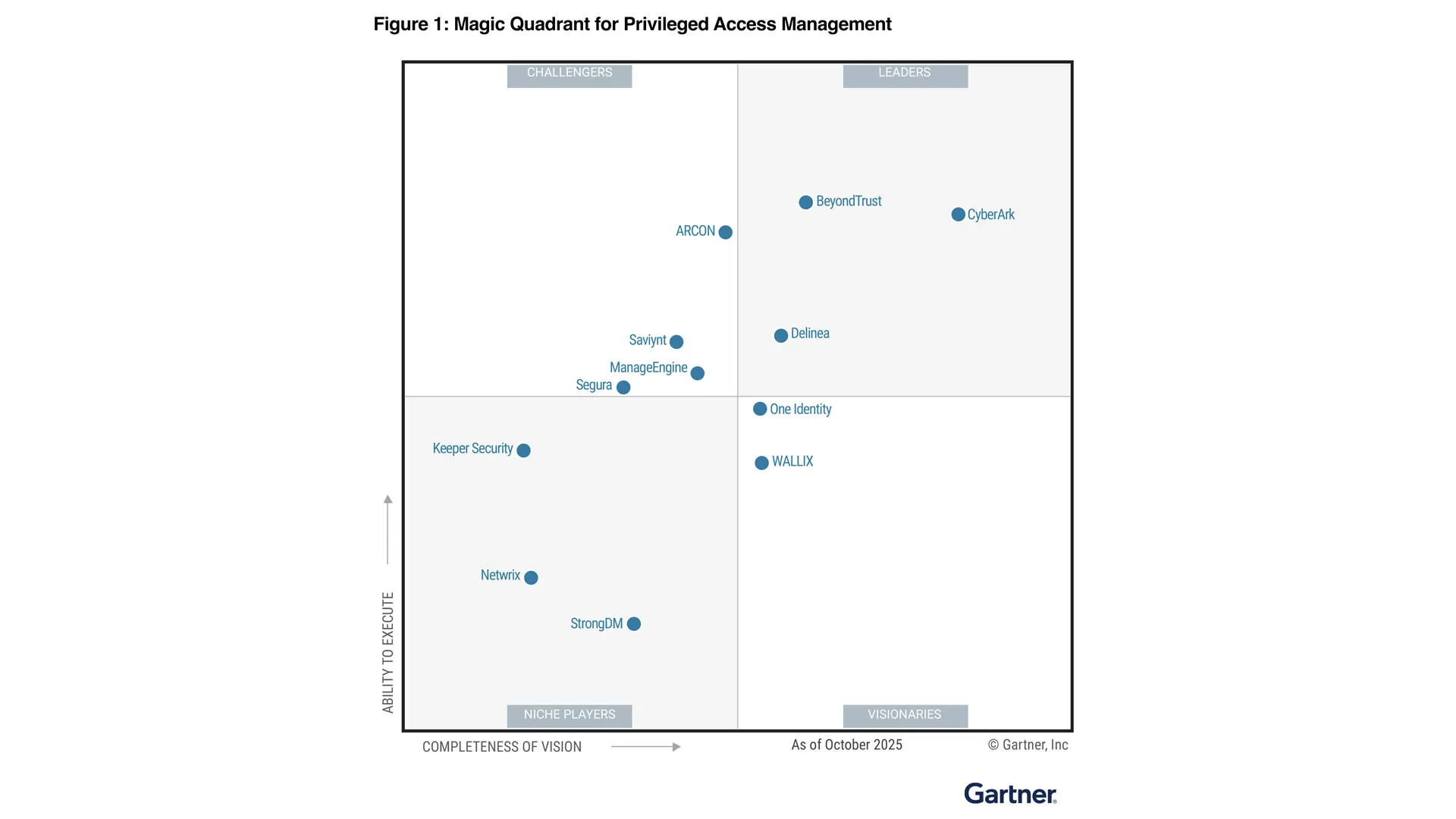
Gartner® Magic Quadrant™ for PAM
Research
Ninja Van Increases Security and Boosts Flexibility with BeyondTrust
Research
Buyer’s Guide for Complete Privileged Access Management (PAM)
Research
Bridging PAM, IAM, & IGA with BeyondTrust + Ping Identity
Research
How Vialto Secured a Global Enterprise with Automated Identity and Access Management

Keep up with BeyondTrust

Customer Support Get Started
  • LinkedIn
  • X
  • Facebook
  • Instagram
  • Add BeyondTrust as a preferred source on Google
  • Privacy
  • Security
  • Manage Cookies
  • Do Not Sell My Data
  • WEEE Compliance

Copyright © 2003 — 2026 BeyondTrust Corporation. All rights reserved. Other trademarks identified on this page are owned by their respective owners. BeyondTrust Corporation is not a chartered bank or trust company, or depository institution. It is not authorized to accept deposits or trust accounts and is not licensed or regulated by any state or federal banking authority.

Prefers reduced motion setting detected. Animations will now be reduced as a result.