BeyondTrust - Secure Remote Access and Privileged Access Management
Announcement:
New Omdia Research: Download the report to explore the top agentic AI risks and how organizations are defending against them. Download Now
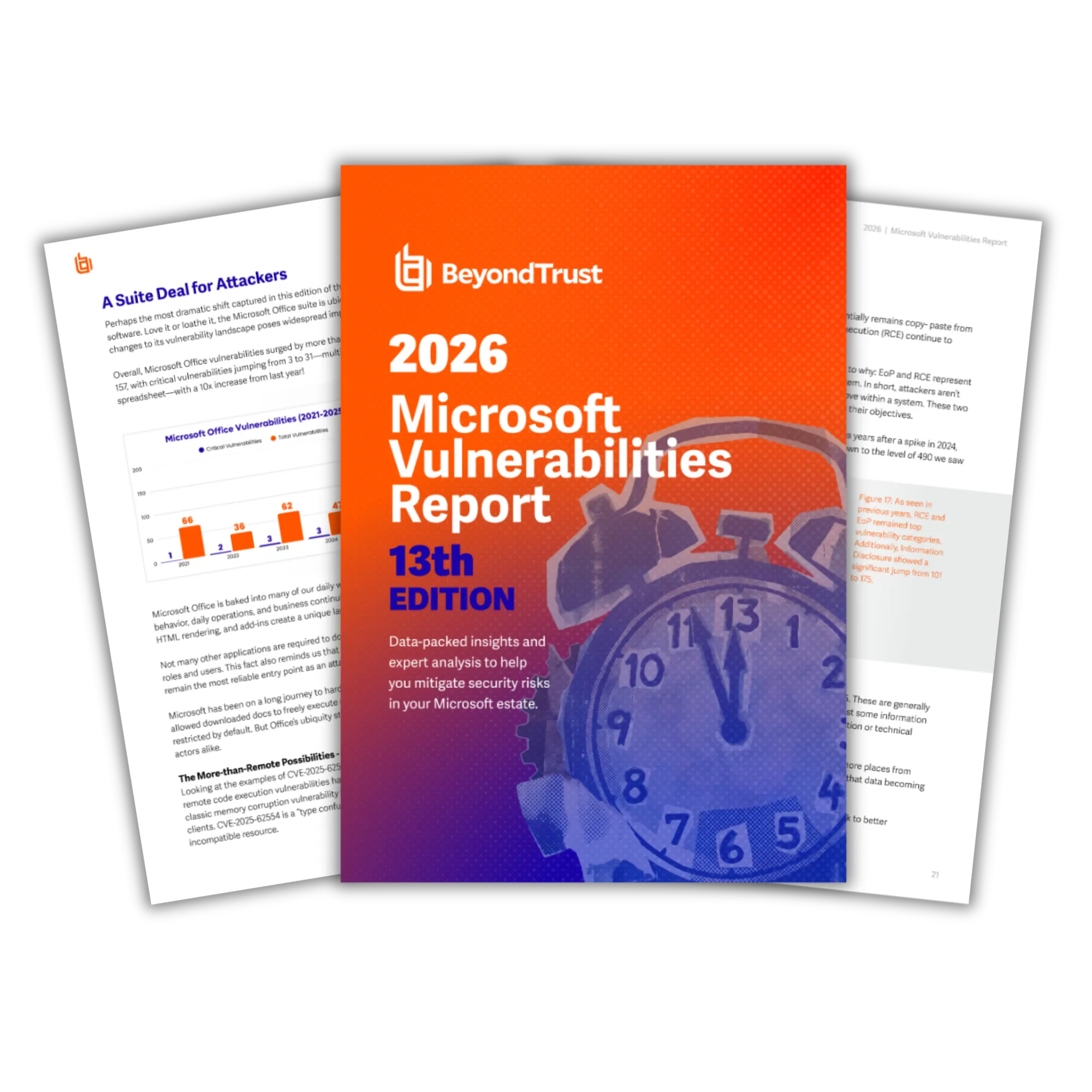
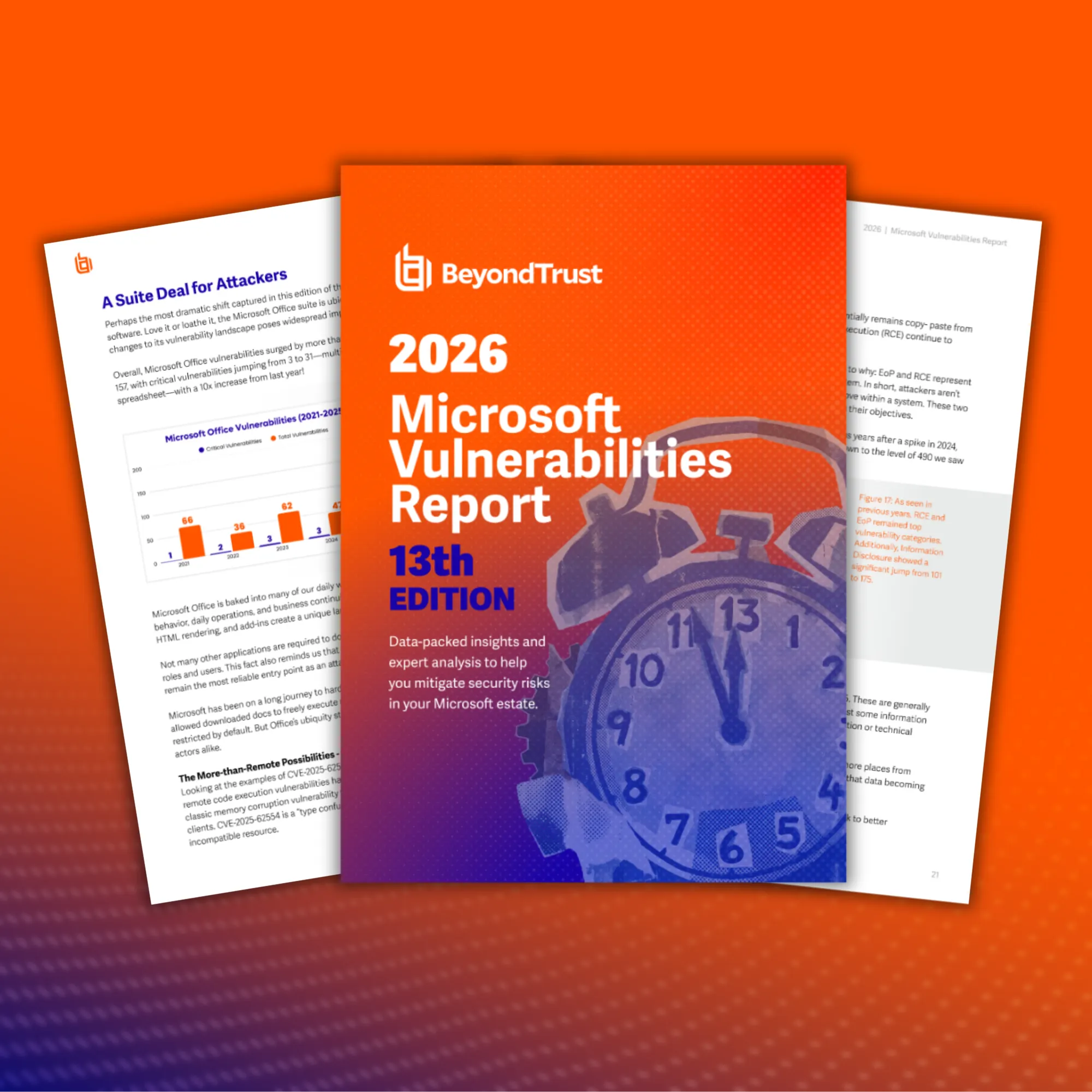
New: 2026 Microsoft Vulnerabilities Report
Access the report for expert analysis of Microsoft's vulnerability and security landscape, breaking down key trends, security shifts, emerging risks—and what it all means for you.
Get the Report

2025 Microsoft Vulnerabilities Report

The 12th Edition of the Microsoft Vulnerabilities Report

Our 12th annual Microsoft Vulnerabilities Report offers a comprehensive dissection of Microsoft's current vulnerability and security landscape: the successes, the emerging risks, and everything in between. Also benefit from expert insights for securing your Windows environment, now and in the future.

Key Findings from the 2025 Report

  • Total vulnerabilities rose to 1,360 in 2024—a record high since the report began.

  • The Elevation of Privilege (EoP) category accounted for a massive 40% (554) of the total vulnerabilities last year.

  • Microsoft Azure and Dynamics 365 vulnerabilities plateaued in 2024.

  • Microsoft Edge experienced a 17% increase to 292 vulnerabilities last year, with 9 critical (an 800% jump).

  • There were 587 Windows vulnerabilities in 2024, 33 were critical.

  • Windows Server had 684 vulnerabilities in 2024, 43 were critical.

  • Microsoft Office experienced 62 vulnerabilities in 2024, almost double that of 2023.

Read the full report for a deeper dive into these findings so you can better understand, identify, and address Microsoft ecosystem risks.

Hero Image - Microsoft Vulnerabilities Report 2025
"Patching is important, sure. So is patching fast. But it's not a silver bullet, it's not even a copper bullet. It’s useful, but you'll need a whole toolbox of other stuff. If your entire security strategy hinges on 'patch all the things ASAP,' you're going to have a bad time. Think least privilege, think segmentation, zero trust, think 'what if we don't patch?'"

—Anton Chuvakin, Security Advisor at Office of the CISO, Google Cloud

"The dominance of Elevation of Privilege vulnerabilities in Windows systems should set off alarm bells for every security professional. At 40% of all vulnerabilities, this category represents the most critical attack surface that defenders need to monitor and control."

—Kip Boyle, CISO, Cyber Risk Opportunities LLC

"The most successful organizations acknowledge that perfection is impossible and build their security programs around the assumption that the threats already have initial access."

—Charles Henderson, VP of Cyber Security Services, Coalfire, Former Head of X-Force at IBM

Topics Covered in the Report Include:

  • Vulnerabilities Data Deep Dive: Explore Microsoft vulnerability data, broken down by category and product. Learn why these vulnerabilities exist and how attackers take advantage of them. This report also calls out notable CVEs within each product and offers a look at each product's security trends over the past 5 years.

  • A Look Into the Future: Discover what this year's data reveals about Microsoft's future, considering long-term trends and the ongoing Secure Future Initiative (SFI).

  • Expert Opinions and Advice: Hear from notable industry figures, such as Anton Chuvakin, Security Advisor at Office of the CISO, Google Cloud, Henrik Parkkinen, Cybersecurity Leader, Kip Boyle, CISO at Cyber Risk Opportunities LLC, Sami Laiho, Senior Technical Fellow and Microsoft MVP, Charles Henderson, VP of Cybersecurity Services at Coalfire and Former Head of X-Force at IBM, Paula Januszkiewicz, CEO & Owner of CQuire and Cybersecurity Expert, Chuck Brooks, Subject Matter Expert and DHS CISA Space Systems Critical Infrastructure at US Department of Homeland Security, and Marc Maiffret, CTO at BeyondTrust.

  • Why the Security Fundamentals Remain Essential: Through a modern lens, gain expert insights into how practices such as enforcing least privilege and zero trust, prioritizing vulnerability management, and securing remote access pathways can make all the difference in defending your Windows environment against present and future threats.
"Many businesses still rely on reactive security, only responding after an attack happens. Instead, they should focus on constantly monitoring for threats, using advanced analytics, AI-driven detection, and red-teaming exercises. Strong cybersecurity isn’t just about having more tools—it’s about using them effectively in a well-coordinated security strategy that evolves alongside new threats."

—Paula Januszkiewicz, CEO & Owner, CQURE

"More than ever, attackers are leveraging misconfigurations and manipulating application logic to skip past authentication steps and other security measures. This is why we need a multi-layered strategy to fortify every step of security. Defense in depth works!"

—Anton Chuvakin, Security Advisor at Office of the CISO, Google Cloud

"In the age of identity security, there is more attack surface than ever for attackers to gain a foothold in your environment. Attacks can start on-prem, but end in the cloud; a user’s identity can be compromised and used to access data in a SaaS app without ever touching your network; or a help desk can be socially engineered to bypass MFA."

—Marc Maiffret, CTO, BeyondTrust

Chief Technology Officer

BeyondTrust Mitigates Traditional Vulnerabilities & Modern Identity-Based Risks

BeyondTrust can help mitigate Microsoft vulnerabilities and protect the entire identity infrastructure. The BeyondTrust Pathfinder Platform cohesively unifies advanced capabilities across multiple identity security disciplines to deliver a multilayered least privilege defense.

Today, our multicategory identity security leadership spans Privileged Access Management (PAM), Identity Threat Detection and Response (ITDR), Cloud Identity Management, and Cloud Infrastructure Entitlement Management (CIEM).

Learn MoreCircle Arrow Right